calm numbers, in plain sentences: designing health apps people trust
people trust health apps with their sleep and their daily habits. here's how we design wellness products that feel calm, honest, and kind, from kenko AI and haku health.
 by joseph zakher · 3 min read
about a third of US adults now turn to AI chatbots for health advice, according to KFF's 2026 poll.
that's a lot of trust, handed to software.
so how do you design for it? this year we worked on two health products: kenko AI, a smart ring and strap with an app, and haku health, our own nutrition and sleep app. here's what they taught us.
every number is an estimate
a ring on your finger estimates your sleep stages. a sleep lab measures them.
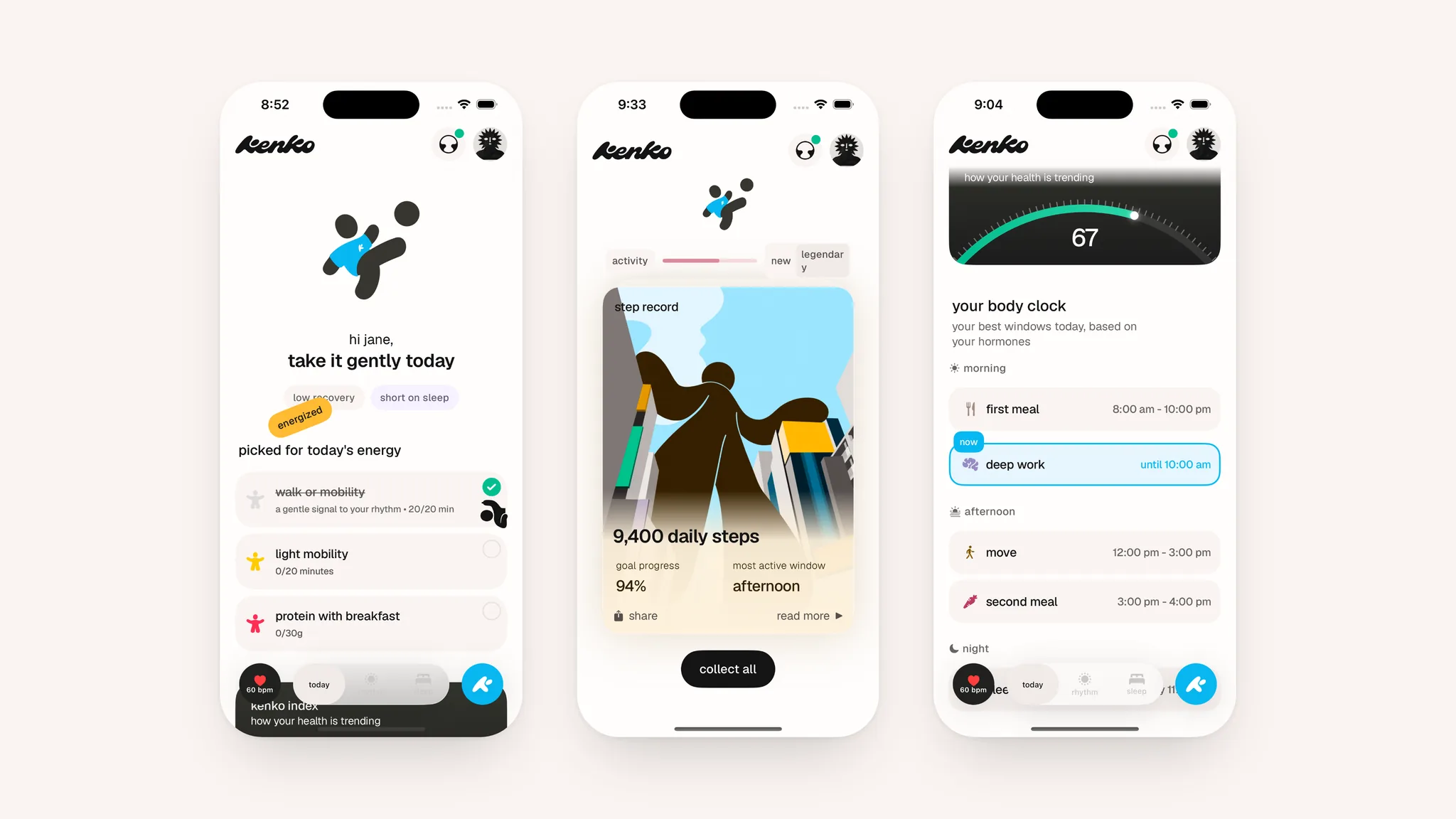
that difference belongs on the screen. so every figure in kenko reads as an estimate, explained in a plain sentence. haku works the same way: every number is an estimate.
people forgive an honest estimate. they stop trusting a number that pretends to be exact.
plain sentences over scores
a score alone is a puzzle. a sentence is an answer.
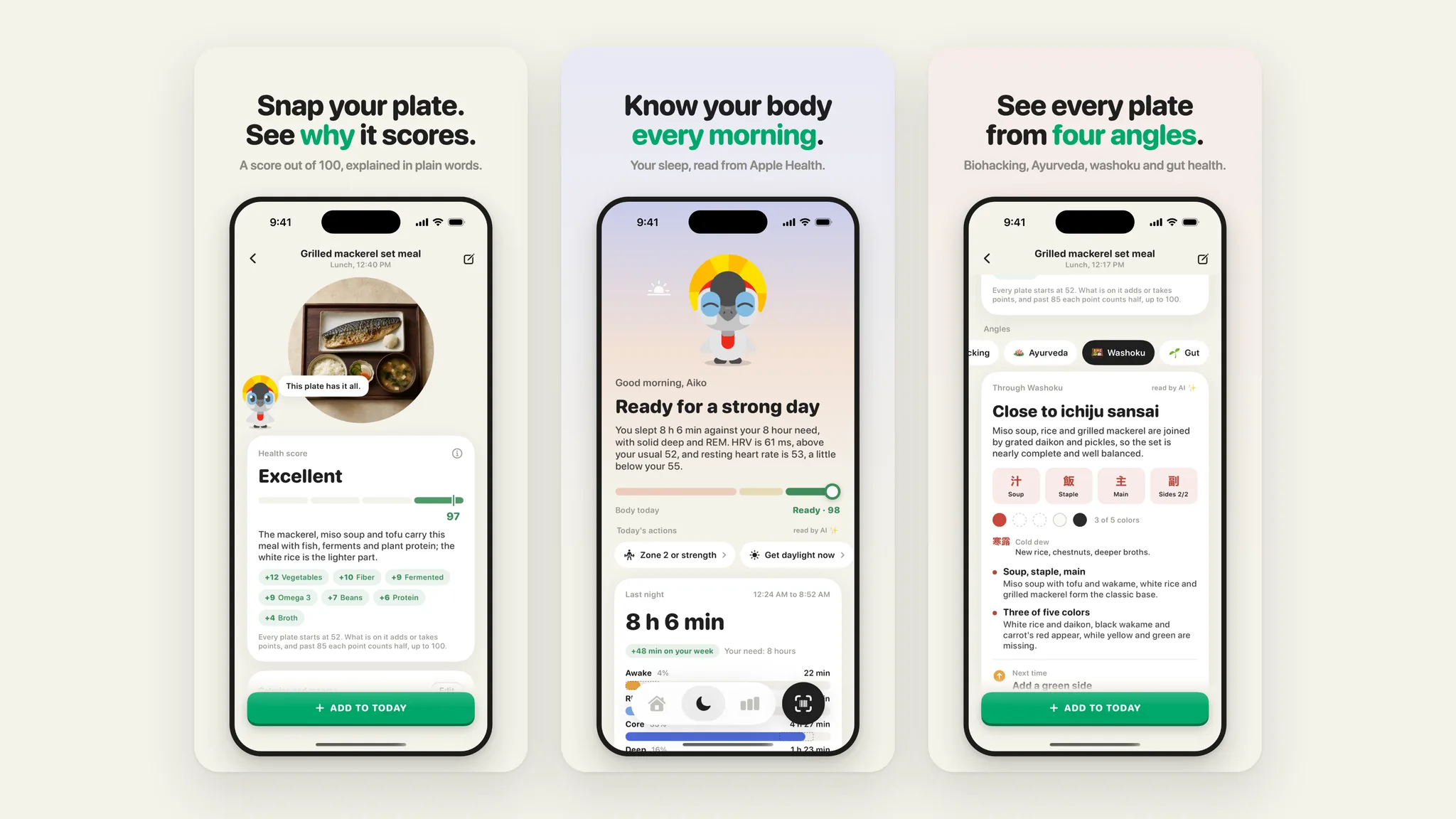
kenko estimates your sleep stages and hormonal patterns, then explains them in plain sentences. haku gives a plate a score out of 100, and always shows the reasons.
the reason is the product. the score is just the headline.
meet people where they are
point haku at a plate, a barcode, or a label, and it explains it in plain words.
then you choose the lens: biohacking, ayurveda, washoku, or gut health. people come to food from different traditions. the app speaks each one.
goals that feel like play
daily goals should feel like play.
in kenko, finishing your daily goals pays you back in points and collectible cards. we designed the card system as part of the product, so the reward feels like part of the ritual.
kind in every reminder. made to come back to.
a clear reason on every permission
health data is personal. every permission gets a clear reason, in one line, and data stays close to the person it belongs to.
haku reads your sleep from apple health each morning, and it tells you why it asks. tabilog, our travel app, keeps all of its data on the phone.
the words are part of the product
in january 2026, the FDA revised its general wellness guidance. it's a reminder that the words and the nudges in your app help decide what kind of product it is.
that's why your regulatory advisor guides every claim, and we shape the words and screens to match. we gather every sentence about the body at kickoff, ready for their review.
our part is clarity and care: plain sentences about habits and patterns, and every figure shown as an estimate.
calm by default
one clear thing per screen, at a pace that respects the person using it.
a health app is part of someone's morning. it should lower the temperature of their day.
where to begin
you can start with one small thing this week. that's enough.
- find every number in your app, and add a plain sentence under it.
- rewrite one permission request so it explains why, in one line.
- share every sentence about the body with your regulatory advisor before launch.
see how this looks in kenko AI and haku health, or book a call if you're building in health and wellness.
this is design guidance from our own work. your regulatory and legal advisors make the call on what your product can claim.