building a startup in the age of AI: design. build. sell.
the distance between an idea and a real product has never been this short. here's what that changes for founders, and what still decides who wins.
 by joseph zakher · 4 min read
this summer, i wrote down ten app ideas.
then i realised i could build all ten in ten days. one app a day.
they'd be first versions. but they'd be real, live, in people's hands. a year earlier, the same list would have needed months, a developer, a budget, and a lot of patience.
that's the age we're building in now. so here's what i see from the studio, and from my own apps.
the distance got short
when i was 15, a laptop felt like a door into another world. anything could exist if you cared enough to build it.
this year, that feeling became literal.
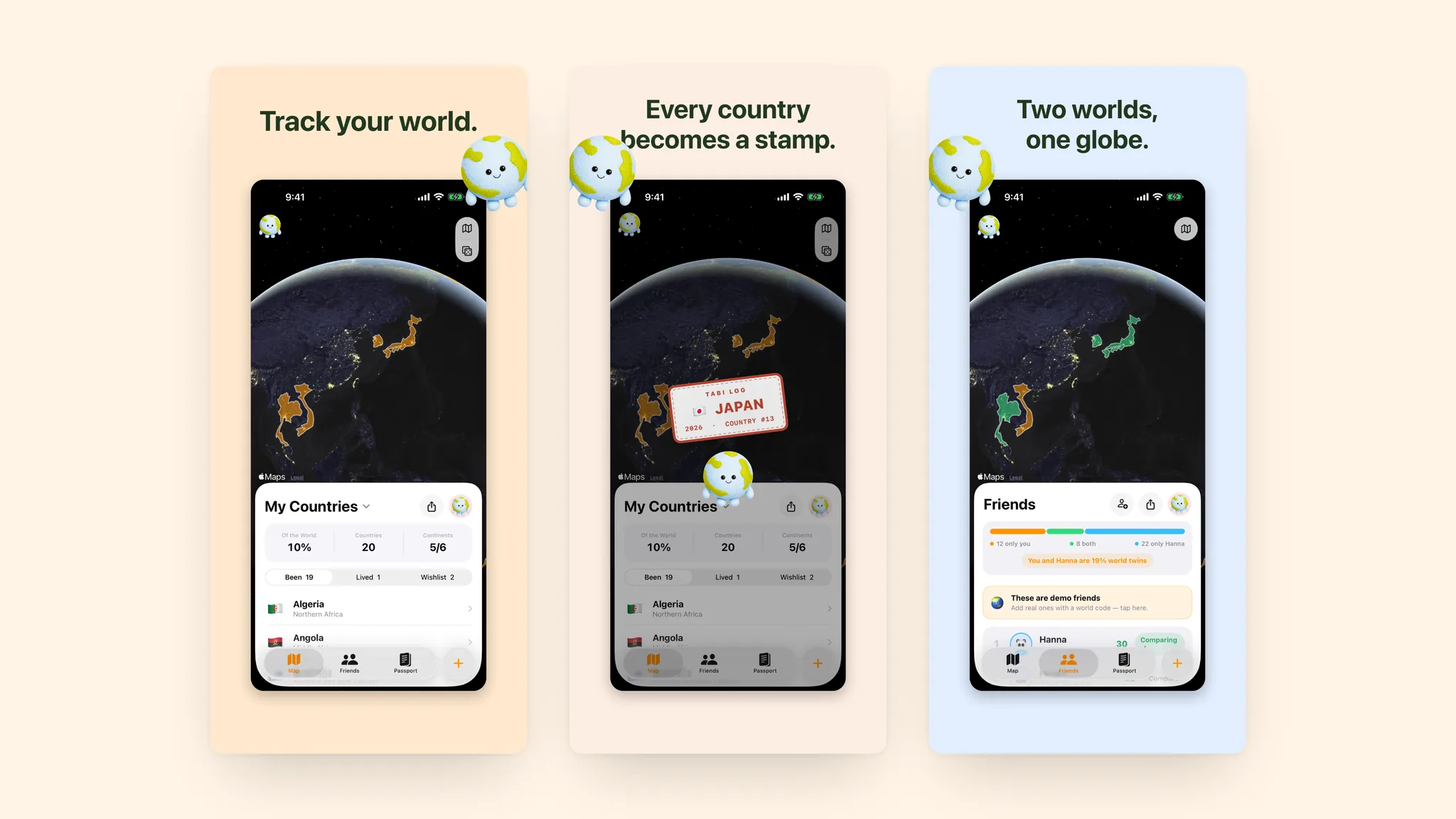
tabilog, my first iOS app, went from an idea to the app store this summer. it keeps a simple record of every country you've visited, glowing on a 3D globe. i designed it, built it, and shipped it, with AI tools doing a lot of the heavy lifting.
and plenty of people are doing the same. carta's data shows the share of new startups with a single founder has doubled since 2016, to about 36%.
more people can take an idea all the way to a product. i find that genuinely exciting.
what got cheap, and what got valuable
here's the honest part.
the execution got fast. layouts, scaffolding, routine integrations, first drafts of copy, even tests. AI speeds up all of it.
so where does the value go? up.
into taste. into product logic: how a thing should actually work, beyond how it looks. into the decisions that only come from understanding the person you're building for.
naval said it years ago: learn to build, learn to sell. for founders and designers, i'd write it as three verbs.
design. build. sell.
that used to be a founding team. now it can be one person's skill stack. or one small, senior team.
shipping is still the hard part
building faster also gives you more chances to avoid shipping.
you can add another feature. redesign the onboarding. change the icon again. convince yourself the next version is the one people should see.
with tabilog, i had a long list too: cities, exact dates, the people you travelled with. i kept all of it for later. the first version does one thing well. you choose a country, add the year, and watch your globe fill in.
then i shipped it. now the real thing teaches me, faster than any design file could.
where AI helps, and where people decide
at startup ui, AI is part of every launch. it drafts, scaffolds, tests and checks.
people make the product decisions. experienced people own permissions, payment failures, edge cases, quality, and the release checks.
for AI and health products, this matters even more, because trust is the product. an agent that shows its work, or a health number explained in a plain sentence, comes from careful design choices. a model can draft the screen. a person decides what the screen should promise.
start with three workflows
if you're holding onto an idea, begin with one useful interaction.
for tabilog, it was tracking the countries i've been to on a beautiful map. everything else could wait.
for a startup, it's usually your three core workflows: the moments a customer comes back for. that's why our app launch is built around exactly three. small enough to ship in weeks. big enough to learn something real.
a founder who ships three workflows this month learns more than one who plans thirty for a year.
build a system that can absorb disruption
one more lesson, from a volcano.
this july, mount etna erupted while i was in sicily. my flight to london was one of around 130 cancellations.
a year earlier, that would have wrecked my week. this time, the work kept moving, because the system around it was built to travel.
AI makes that possible for small teams. a mac mini in the studio runs agents around the clock: research, drafts, follow-ups, repetitive admin. it feels like hiring a tireless junior teammate for the price of electricity.
so build a company that fits the life you prefer to live. and build it so it keeps working when plans fall apart.
where to begin
you can start with one small thing this week. that's enough.
- write down the smallest version of your idea someone could genuinely use.
- remove half of it. then build that.
- show it to a few people before it feels ready.
if you'd like a hand, a $750 launch blueprint turns your idea into a plan and a fixed quote. or add up your launch with our cost calculator.